

A Practical Guide for Getting Found and Staying Relevant
You built your website. You’ve been posting content for a while now. But something still feels off.
Maybe your traffic is flat. Maybe you’re getting visitors, but they’re not the right ones. Maybe you know you need to do more, but you’re not sure what “more” actually means.
You’re not alone. A lot of business owners hit this exact wall. The site works as a business card. It just doesn’t work as a growth engine yet.
That’s where developing a solid content strategy comes in.
Content strategy means deciding what you publish, why you publish it, and how it connects to everything else on your site. Done right, it turns a stack of blog posts into a system that brings in the right readers, answers their real questions, and keeps them coming back.
Here’s what that actually looks like today.
Start With Your Intended Reader
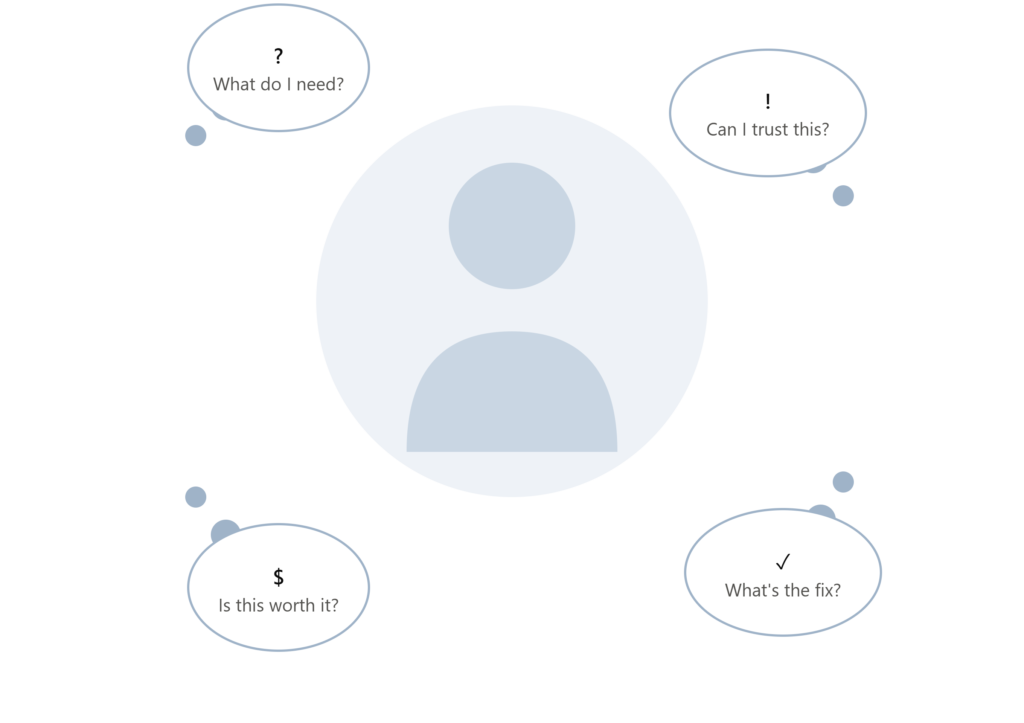
Before you write anything, know who’s reading it. Not a vague idea of your audience. A real picture of the person searching for what you offer, including what they’re worried about and what they need to hear before they trust you.
Marketers often call this a reader persona or buyer persona: a detailed picture of one real type of person, built from actual patterns in who buys, who asks questions, and who sticks around. It’s not a guess. It’s built from real behavior, real questions, and real feedback from the people you already serve.
This still matters as much as it ever did. What’s changed is what comes next.
Build Your Content Around Topics, Not Just Keywords
Search engines used to reward pages built around a single keyword. That’s no longer enough. Google, Bing, and AI tools like Copilot now reward sites that show real depth on a subject.
That means grouping your content into clusters. One strong pillar page covers a topic broadly. Smaller, connected articles go deep on specific parts of it. Internal links tie them together, so both readers and search engines can see how it all fits.
Write for Search Engines and AI Overviews
Search has changed. People still type questions into Google, but they’re also getting answers directly from AI Overviews, Copilot, and other AI tools, often without clicking through to a website at all.
That means your content needs to answer questions clearly and directly, near the top of the page, in language a search engine (or an AI model) can easily pull from. Save the deeper explanation for after you’ve already answered the core question.
Show Real Experience, Not Just Information
Google’s guidelines now put heavy weight on E-E-A-T:
- Experience
- Expertise
- Authoritativeness
- Trust
In plain terms, that means it’s no longer enough to explain a topic. You need to show you’ve lived it.
That could mean sharing a real example, a specific result, or a lesson learned from doing the work yourself. Generic advice is easy to find. Real experience isn’t.
Keep a Living Plan, Not a One-Time List
A content strategy isn’t a document you write once and forget. It’s a living plan that gets reviewed and adjusted as your site grows, as search engines change, and as your business needs shift.
That includes revisiting old content. An article that ranked well two years ago may need fresh information, a new meta description, alt text updates on images, updated links, or an altogether new angle today.
A Strong Content Strategy Connects Every Piece
None of this works in isolation. A strong headline doesn’t matter if the content underneath it doesn’t deliver. A well-researched article won’t get found if it isn’t part of a bigger structure. Content strategy is what ties all of it together, so your site builds authority instead of just noise.
If you’re not sure where your own content strategy stands, that’s usually the first thing worth figuring out. If you’d like a second set of eyes on it, I’d be glad to take a look and talk through what my services can do to help. Click here to get in touch and get the ball rolling.