

Wondering if blogging is still worth the effort? With social media, paid advertising and video content competing for attention, it is easy to assume blogs are outdated.
The reality is that a well-planned business blog can still be one of the most valuable tools in a company’s marketing strategy.
A blog is not simply a place to post company updates. When done correctly, it helps businesses answer customer questions, demonstrate expertise, improve search visibility and build trust with potential customers before they ever make contact.
The key is understanding that successful business blogging is not about publishing as often as possible. It is about creating useful content that helps the right audience find answers and take the next step.
What Is a Business Blog?
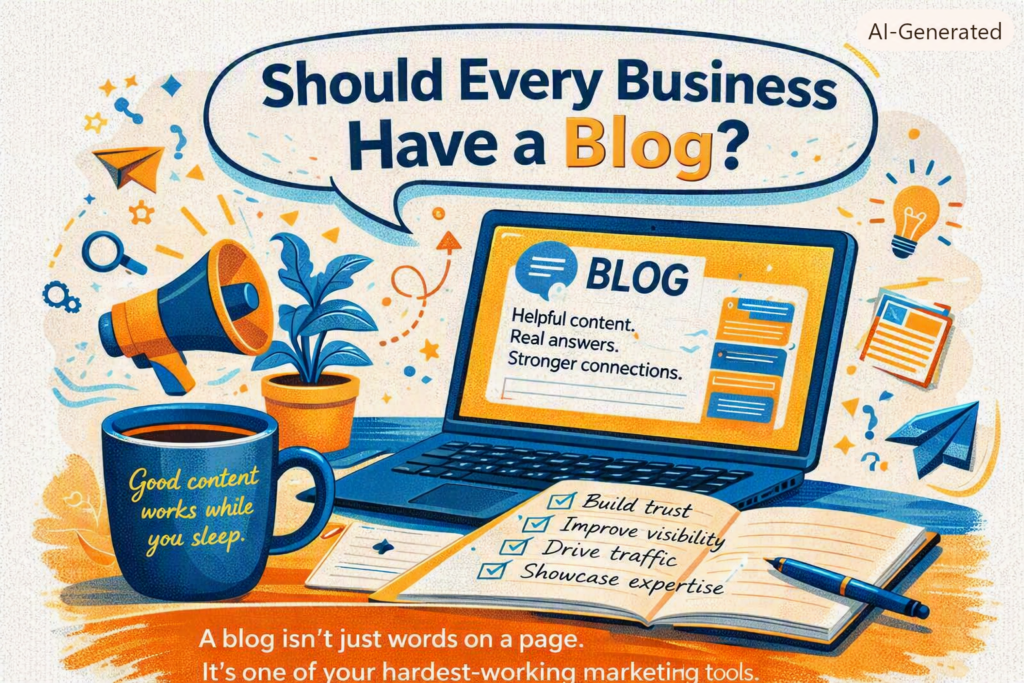
A business blog is a section of a company’s website where it publishes educational, informational or helpful content related to its products, services or industry.
Unlike traditional advertising, blog content continues working over time. A helpful article published today can continue attracting visitors through search engines months or even years later.
For example:
- An HVAC company might publish an article explaining how often homeowners should replace their air filters.
- An auto dealership might create a guide explaining what buyers should know before purchasing a classic vehicle.
- A healthcare organization might publish information about preparing for a medical appointment.
Each article provides value while also introducing potential customers to the business behind the information.
Why Businesses Should Consider Starting a Blog
1. Blogs Help Customers Find Your Business Online
Many customers begin their buying journey with a question.
Before contacting a company, they often search for information, compare options and research solutions to their problems.
A business blog creates opportunities to appear in those searches.
Instead of only trying to rank for a broad phrase like “plumber near me,” a plumbing company could create content around questions customers are already asking:
- How do I know if my water heater needs repair?
- Why does my faucet keep dripping?
- How much does a plumbing inspection cost?
Helpful content allows businesses to meet potential customers earlier in the decision-making process.
According to Google’s guidance on creating helpful content, websites should focus on producing content made for people rather than content created only to manipulate search rankings. The goal should be providing a satisfying experience for visitors.
2. Blogs Build Trust and Show Expertise
Customers want to work with businesses they trust.
A blog gives businesses a place to demonstrate knowledge and experience. Instead of simply saying, “We are experts,” companies can prove it by answering real questions and sharing useful information.
For example, a financial advisor can explain common retirement planning mistakes. A contractor can explain how homeowners can prepare for a renovation project. A marketing consultant can explain how businesses can improve their online visibility.
This type of content helps establish credibility before a customer ever reaches out.
3. Blog Content Can Be Repurposed Across Marketing Channels
A single blog article can become the foundation for multiple pieces of content.
A business can turn an article into:
- LinkedIn posts
- Facebook content
- Email newsletters
- Short videos
- Infographics
- Customer education resources
This makes blogging more efficient because businesses are not constantly starting from scratch.
For example, a blog post explaining five common customer mistakes could become five separate social media posts or a short video series.
4. A Blog Supports Long-Term Marketing Growth
Paid advertising can be effective, but it stops bringing results when the budget stops.
A strong content library can continue attracting visitors over time.
Businesses that consistently publish helpful content create a valuable resource for their audience. Over time, those articles can support search engine optimization, brand awareness and customer education.
Research from organizations like HubSpot has shown that companies that invest in content marketing often see benefits from creating valuable content that attracts and engages their target audience.
Does Every Business Need a Blog?
Not every business needs to publish several articles every week.
The right blogging strategy depends on the company, industry, audience and goals.
For some businesses, publishing one well-researched article each month may be enough. Others may benefit from a more frequent content plan.
The important question is not:
“How many blog posts should we publish?”
The better question is:
“What information does our audience need that we can provide?”
A blog should support the customer journey, not simply fill a website with words.
What Should a Business Blog About?
Many businesses struggle with the same question: “What should we write about?”
The best topics usually come from customer needs.
Answer Common Questions
What questions do customers ask before they buy?
Those questions often make excellent blog topics because they match what people are already searching for.
Explain Your Services
A blog can help customers understand what a business does and why it matters.
For example:
- A dentist can explain different treatment options.
- A mechanic can explain warning signs of vehicle problems.
- A marketing company can explain SEO basics.
Share Industry Knowledge
Educational content helps businesses become trusted resources.
Instead of only promoting products or services, businesses can teach customers how to make better decisions.
How Often Should a Business Publish Blog Posts?
There is no universal answer.
Publishing one excellent article that answers an important customer question is often more valuable than publishing several low-quality posts.
A realistic schedule is usually better than an ambitious plan that becomes impossible to maintain.
Businesses should focus on:
- Creating useful content
- Publishing consistently
- Updating older articles when needed
- Measuring what content performs well
A successful blog is built over time.
Where Should You Publish Your Business Blog?
Your Own Website
A company website should usually be the primary home for blog content.
Publishing on your own website allows you to:
- Build search visibility
- Create a resource library
- Drive visitors toward your products or services
- Maintain ownership of your content
LinkedIn and Other Platforms
Social platforms can help expand the reach of blog content.
A business can share key insights from an article on LinkedIn, create discussion around the topic and encourage people to visit the full article.
However, social media should support your website content rather than replace it.
Common Business Blogging Mistakes
A blog can lose effectiveness when businesses make a few common mistakes.
Writing Only About Products
Customers don’t always want a sales pitch. They want answers.
Educational content helps build relationships before a purchase decision.
Ignoring Search Intent
A good article should answer a question people are actually asking.
Keyword research and customer research can help identify useful topics.
Publishing Without a Strategy
A collection of random articles is less effective than a planned content strategy.
Businesse owners should understand:
- Who they are trying to reach
- What questions those customers have
- What action they want readers to take
Starting and Stopping
A blog does not usually create results overnight.
Like other marketing efforts, it requires consistency and improvement.
How Content Strategy Makes Blogging More Effective
A successful business blog requires more than writing skills.
Effective blogging combines:
- Audience research
- Keyword research
- Content planning
- Search engine optimization
- Internal linking
- Clear calls to action
- Performance tracking
The best content answers customer questions while also supporting business goals.
A blog should not exist just because competitors have one. It should exist because it helps customers and creates opportunities for growth.
A business blog can be a powerful marketing tool when it is built around the needs of your audience.
The goal is not simply to publish more content. The goal is to create helpful resources that attract potential customers, demonstrate expertise and build trust.
For many businesses, a thoughtful blogging strategy can become one of the most valuable parts of their online presence.
Sources:
- Google Search Central: Helpful content guidance
- HubSpot: Content marketing research and resources
- Content Marketing Institute: Content strategy and marketing education