

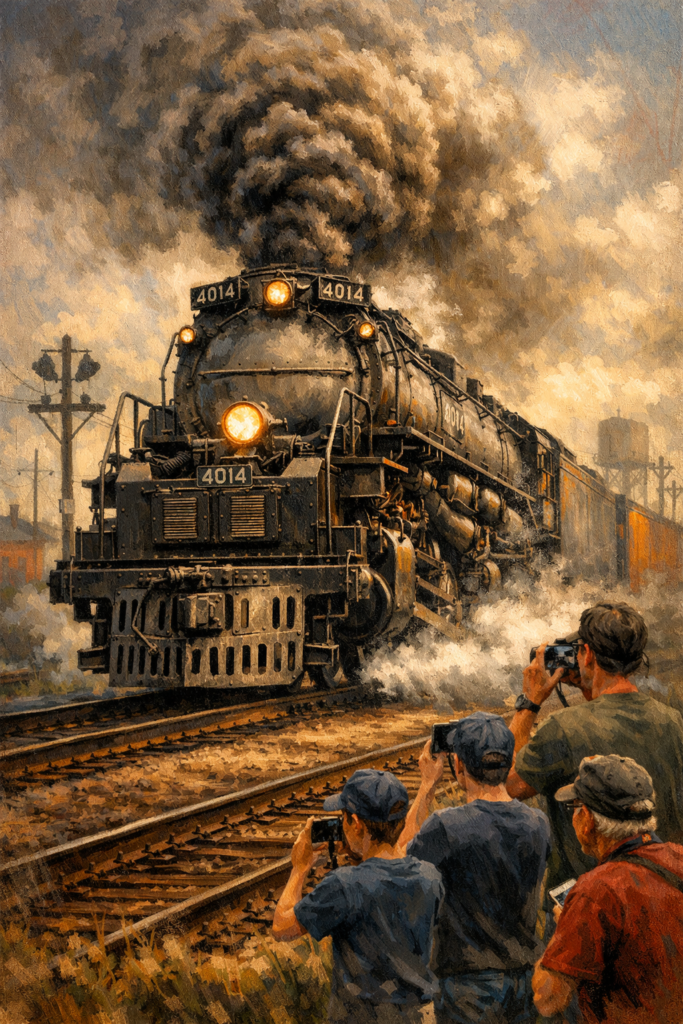
When thousands of people spend hours of their day trying to catch a glimpse of a steam locomotive, something bigger than transportation is happening.
They aren’t waiting for a train because they need to get somewhere. They’re waiting because they want to experience something meaningful.
Union Pacific’s Big Boy tour is one of the most recent examples of the incredible power of nostalgia marketing. The massive steam locomotive drew crowds across the country as people gathered to see a piece of American railroad history in motion.
In Fostoria, Ohio, the response demonstrated just how powerful that emotional connection could be. According to local officials interviewed by WTOL 11, approximately 46,000 people entered the Big Boy display area, while another 46,000 were estimated to have arrived but were unable to access the event before it concluded.
Those numbers represent more than attendance figures. They represent thousands of people who were motivated enough to rearrange their schedules, travel significant distances and spend hours, and money, pursuing a shared experience.
- That is the power of nostalgia marketing.
- It does not simply create awareness.
- It creates emotion.
And when marketing creates a strong emotional connection, businesses need to be prepared for the response that connection can generate.
What Is Nostalgia Marketing?
Nostalgia marketing uses memories, traditions and emotional connections to create stronger relationships between customers and brands.
Instead of focusing only on what a product or service does, nostalgia marketing focuses on what it represents.
- For example, a classic car isn’t just a vehicle. It may represent freedom, family road trips or memories of another era.
- A favorite restaurant isn’t just a place to eat. It may remind someone of family celebrations, childhood traditions or special moments.
- A historic train isn’t just a machine. It can represent craftsmanship, adventure and a connection to previous generations.
The most effective nostalgia marketing, or any type of marketing for that matter, answers a deeper question:
How does this make people feel?
That emotional connection is powerful because people often remember experiences and how things felt long after they forget details.
They may not remember every feature of a product, but they remember how a brand, business or event made them feel.
Why Nostalgia Marketing Works
Nostalgia is powerful because it connects memories and emotions from the past with experiences in the present.
Many purchasing decisions are emotional before they are logical. Customers want products and experiences that reflect who they are, what they value or what they want to feel.
Nostalgia marketing works because it taps into several powerful human motivations:
Connection
People want to feel connected to something larger than themselves.
Nostalgia marketing recognizes that a historic product, tradition or experience can create a bridge between generations.
Authenticity
In a world filled with digital experiences and constant change, authentic experiences stand out.
A restored steam locomotive, a vintage storefront or a family-owned business with decades of history can feel more meaningful because it has a story.
Shared Experiences
People are drawn to moments they can share.
A family trip, community event or once-in-a-lifetime opportunity becomes more valuable because it creates a memory with other people.
Scarcity
Limited-time experiences naturally create urgency.
When people believe they may never have another chance, they are more likely to make the effort to participate.
Union Pacific’s Big Boy tour combined all of these elements.
- It was historic.
- It was rare.
- It was visually impressive.
- And it gave people a reason to gather.
Why Big Boy Created Such a Powerful Response
Union Pacific’s Big Boy No. 4014 is an extraordinary piece of engineering. Originally built during World War II, it represents an era of American railroading that many people associate with craftsmanship, innovation and history.
But the crowds were not only there because of the technical achievement.
- They came because the locomotive represented something bigger.
- Some visitors remembered seeing trains as children.
- Some wanted to share the experience with their children or grandchildren.
- Some were fascinated by the engineering and history.
- Others simply recognized that they were witnessing something rare.
That leads us to one of the most important lessons in marketing:
Different customers can love the same thing for completely different reasons.
Still using UP’s Big Boy event as an example:
- A railroad enthusiast may appreciate the mechanical details and restoration history.
- A parent may see an opportunity to create a memorable day with their child.
- A photographer may see a once-in-a-lifetime image.
- A traveler may see an adventure.
The best marketing reaches all of those audiences by understanding the emotional connection behind the interest.
When Great Marketing Creates Unexpected Challenges
Most businesses spend a lot of time asking:
“How do we attract more customers?”
That is an important question.
But there is another question businesses should ask:
“What happens if our marketing works better than expected?”
The Big Boy tour provides an excellent example.
The response showed that nostalgia marketing can create extraordinary demand. Thousands of people were willing to spend hours of their day pursuing the opportunity to experience something special.
That is a marketing success.
However, success also creates responsibility.
When customers respond to your marketing, they are making an investment.
They invest:
- their time
- their money
- their energy
- their expectations
They are not only purchasing a product or attending an event.
They are trusting that the experience will be worth the effort.
The Importance of Keeping the Promise
Every marketing campaign makes a promise.
Sometimes that promise is obvious:
- “Come see this historic train.”
- “Try this new product.”
- “Attend this special event.”
But the deeper promise is emotional:
- “This will be worth your time.”
- “This will create a memory.”
- “This will be an experience you will want to share.”
That is why customer experience matters so much.
A customer who has a good experience may tell a few people. A customer who feels disappointed may share that experience with many more, especially in today’s connected world.
The difference is often not whether something unexpected happened. Unexpected challenges happen in every business.
The difference is how well the business prepares, communicates and responds.
Planning for Success Beyond Expectations
Many businesses plan for problems.
They create backup plans for:
- bad weather
- equipment failures
- staffing issues
- unexpected delays
But fewer businesses plan for overwhelming success.
What if:
- your event attracts ten times the expected attendance?
- your product sells out immediately?
- your video goes viral?
- your restaurant becomes the newest local sensation?
- your promotion brings in more customers than you can serve?
Success planning is still risk planning.
A business that prepares for growth is better positioned to turn excitement into loyalty.
How Businesses Can Use Nostalgia Marketing
You do not need a historic train or a century-old brand to use nostalgia marketing.
Every business has opportunities to create emotional connections.
A local restaurant can:
- share the story behind family recipes
- celebrate its history
- highlight longtime customers
A retailer can:
- bring back classic products
- share company history
- celebrate community traditions
A service business can:
- tell the story of how it began
- highlight generations of customers
- showcase the people behind the brand
A content creator can:
- revisit popular past topics
- share origin stories
- connect current work to earlier experiences
The key is authenticity.
Customers can tell the difference between a genuine story and a marketing tactic that simply borrows an old-fashioned look.
The Lasting Lesson of Big Boy
The Big Boy tour proved something important:
People still value experiences that connect them with history, craftsmanship and shared memories.
In a world where so much of life happens through screens, people are still willing to show up for something real.
- They will travel.
- They will wait.
- They will bring their families.
- They will take photos and share stories.
That is the opportunity of nostalgia marketing.
But the responsibility is just as important as the opportunity.
The strongest businesses do not just create excitement, they create experiences that honor the excitement they created.
Because the goal of great marketing is not simply getting people through the door. It’s giving them a reason to remember what happened after they arrived.
Is Your Business Ready for 10X Success?
The Big Boy tour is a reminder that great marketing can create demand far beyond expectations.
The question every business owner should ask is:
If my next campaign succeeds beyond my wildest dreams, will I be ready?
Planning for success can help you protect your customer relationships, strengthen your reputation and brand, and turn a great opportunity into long-term loyalty.
If you would like help creating marketing strategies that connect with your audience and create memorable customer experiences, contact me to discuss ways your business can use nostalgia marketing and other storytelling techniques.