

The smartest content strategy isn’t creating more. It’s making what you create work harder.
Most people think about content creation as a volume game. More posts, more pages, more platforms. But for independent creators, small business owners, and anyone managing multiple sites without a team behind them, that approach burns you out fast.
There’s a better way.
One well-researched, well-written article can live in seven different places — each version customized for a different audience, a different platform, and a different purpose. Not copied and pasted. Customized. There’s a meaningful difference, and that difference is what makes the strategy work.
Here’s exactly how I do it, using a real example from my own content portfolio.
The Source Article
Everything starts with one strong piece of original content. For this example, I’ll use an article I wrote for Intrinsic Vicissitude, my wellness site, titled Natural Ways to Boost GLP-1: Feel Fuller, Lose Weight, and Ease Joint Pain.
The article covers how your body produces GLP-1 naturally, which foods support that process, how even modest weight loss creates real emotional and physical benefits, and what that means for joint health in the knees and hips. It’s research-backed, written at a 7th-8th grade reading level, and anchored by two authoritative sources.
That’s the well. Everything else draws from it.
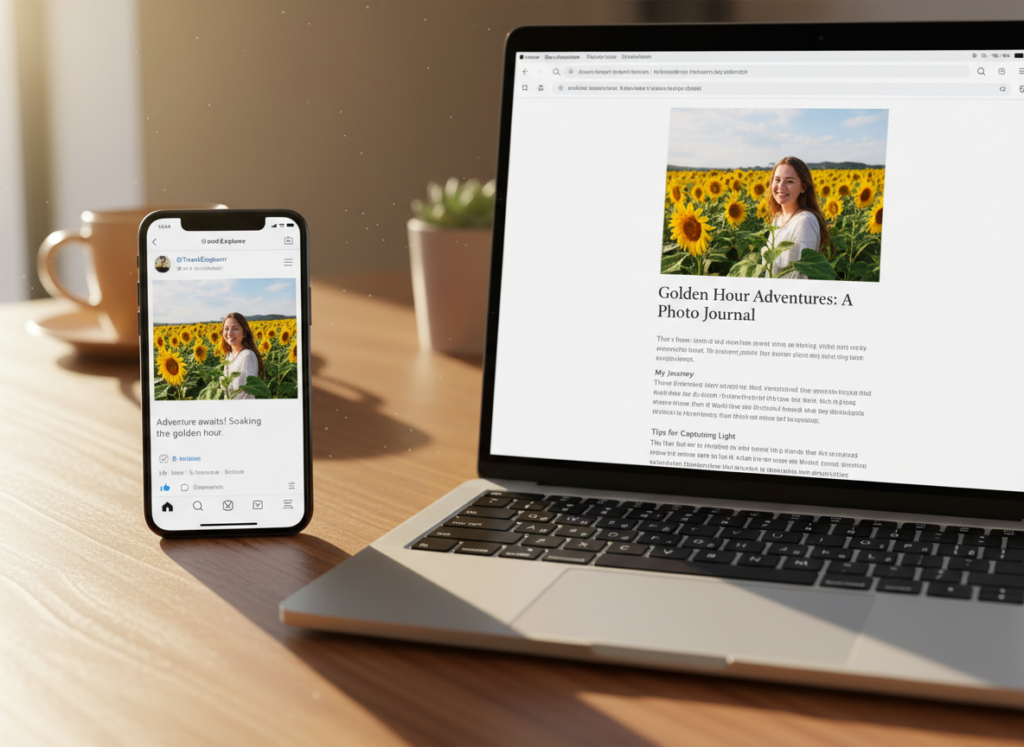
Venue 1: The Original Article (Intrinsic Vicissitude — Wellness)
The source article, Natural Ways to Boost GLP-1: Feel Fuller, Lose Weight, and Ease Joint Pain lives on Intrinsic Vicissitude’s wellness page, where the audience is people interested in personal development, holistic health, and sustainable lifestyle habits. The tone is warm, grounded, and honest. The goal is to inform and support, not sell or alarm.
This is the longest and most detailed version. It earns its place as the hub — the piece everything else points back to.
What makes it work here: Depth. The IV reader wants to understand the why behind the information, not just the what. They’re willing to read 1,200 words if those words are genuinely useful.
Venue 2: A Companion Article (Read Your Own Chart — Patient Advocacy)
Read Your Own Chart is my patient self-advocacy site. The audience there is someone navigating the healthcare system and trying to be an informed participant in their own care. Same topic, completely different lens.
The RYOC companion piece — Before You Say Yes to Ozempic: What to Research and Ask First — doesn’t recap the IV article. It uses the GLP-1 topic as a jumping-off point to teach readers how to research a health topic, what questions to bring to a doctor’s appointment, and why understanding the biology behind a medication changes the conversation you can have with your provider.
The IV article gets a brief mention and a link as a resource for readers who want to explore the food-based side of GLP-1 support. That’s the interlink. One sentence. Entirely natural.
What makes it work here: The framing shift. Same underlying research, different purpose. IV informs. RYOC advocates.
Venue 3: This Post (laurejustice.com — Professional Case Study)
You’re reading venue three right now.
The GLP-1 topic becomes the worked example inside a post about content strategy and repurposing. The audience here is potential clients, collaborators, and employers who want to understand how I think and work. The goal is to demonstrate strategic process, not to explain GLP-1.
What makes it work here: Meta-awareness. Showing the strategy by doing the strategy is more persuasive than describing it in the abstract.
Venue 4: LinkedIn
LinkedIn rewards professional insight and process thinking. The audience skews toward marketers, business owners, content professionals, and people making hiring decisions. Posts that teach something specific and connect it to a real outcome tend to perform well. Longer than other platforms, but still scannable.
Sample LinkedIn post:
One research session. Two articles. Four social posts. Seven total pieces of content.
That’s what a repurposing strategy actually looks like in practice.
I recently wrote a wellness article about natural ways to support GLP-1, the hormone behind satiety, weight regulation, and joint health. Good research. Strong sources. One solid piece of writing.
From there: A companion patient advocacy article for a second site (different audience, different angle, one natural interlink) — A professional case study post breaking down the process (you’re looking at it). Customized social posts for Facebook, Instagram, and Pinterest
Each piece serves a different reader in a different place. None of them are copies of each other.
This is the content strategy I use across my own portfolio of sites, and the same approach I bring to client work.
What does your repurposing process look like?
Venue 5: Facebook
Facebook works differently. The audience is broader, less professionally focused, and more likely to be scrolling casually. They’re not looking for a process breakdown. They want information that’s relevant to something they care about, delivered in a way that’s easy to read and easy to act on. Shorter. Warmer. Direct link to the article. Feature image does a lot of the heavy lifting.
Sample Facebook post:
Did you know your body already makes its own version of the hormone that GLP-1 medications mimic?
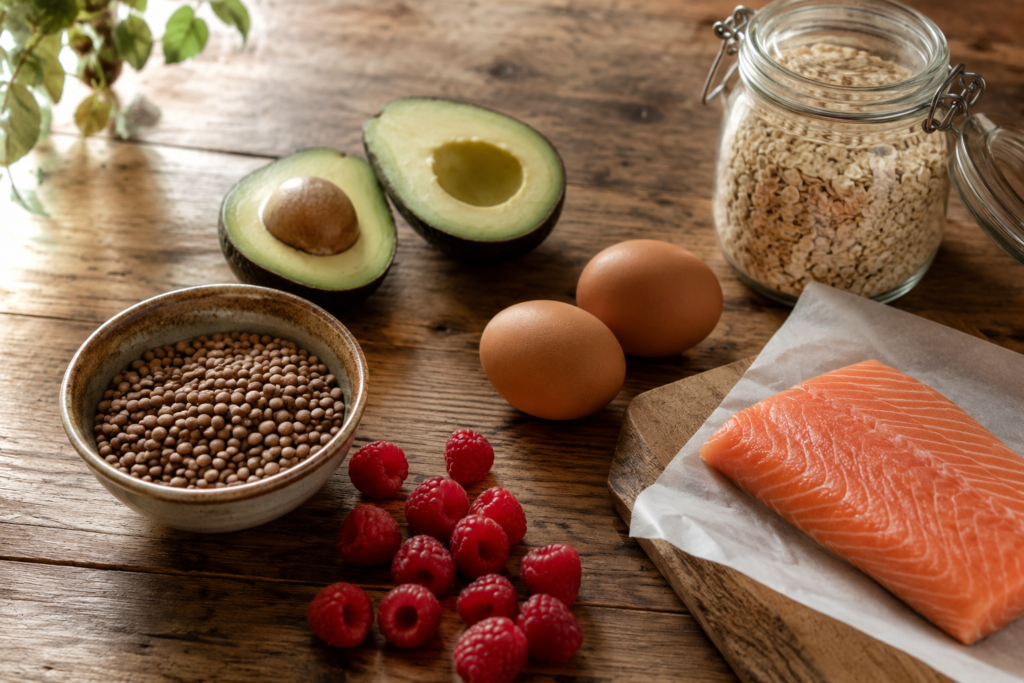
It’s called GLP-1, and certain everyday foods, eggs, avocado, lentils, salmon, oats, help your body produce more of it naturally.
That means better satiety, steadier energy, and even some relief for your knees and hips when you start losing even a little weight.
The full article is on the blog, and it’s worth a read if you’ve been curious about GLP-1 and what it actually does. 🔗 Before You Say Yes to Ozempic: What to Research and Ask First – Read Your Own Chart
Venue 6: Instagram
Instagram is visual first. The caption supports the image rather than leading it. The tone can be slightly warmer and more personal than Facebook, and a soft call to action works well. Hashtags live at the end or in the first comment depending on your preference.
Sample Instagram caption:
Your body already knows how to feel full. It just needs the right inputs. 🥑🍳
GLP-1 is the hormone behind satiety, and the medications you’ve been hearing about work by mimicking what your body already makes naturally. Certain foods help your body produce more of it on its own.
Avocado. Eggs. Lentils. Salmon. Oats. Raspberries.
The full breakdown: including what this means for your joints and your mood, is in the link in bio.
#wellness #naturalweightloss #GLP1 #healthyeating #satiety #antiinflammatory #holistichealth

Venue 7: Pinterest
Pinterest is a search engine dressed up as a social platform. People save pins they plan to come back to, which means your content has a much longer shelf life here than anywhere else. Pins work best when the image is vertical, the text overlay is clear, and the description includes the keywords someone would actually search.
Sample Pinterest description:
Natural Ways to Boost GLP-1: Foods That Help You Feel Fuller, Lose Weight, and Ease Joint Pain
Your body produces GLP-1 naturally, and the right foods help it work better. Discover which everyday ingredients support natural satiety, modest weight loss, and real relief for your knees and hips. No prescription required.
Save this for your wellness board. 🌿

A Note on Platform Choice
I don’t use X (formerly Twitter). The platform shifted in a direction that doesn’t currently align with my content, so I put that energy into platforms where my audiences actually are. For the niches I work in — wellness, patient advocacy, hyperlocal news, automotive — Facebook, Instagram, Pinterest, and LinkedIn cover the ground well. Intentional platform choice is part of the strategy too.
Topic Clustering: The Internal Linking Opportunity
Here’s something worth flagging briefly, because it deserves its own full post down the road.
Every piece of content in this chain creates an internal linking opportunity. The IV article links to future meal plan posts. The RYOC article links to the IV article. This laurejustice.com post links to both. Each social post drives traffic to one of the articles. Over time, these links form a topic cluster, or a web of related content that signals to search engines that you have genuine authority on a subject.
That topical clustering effect is one of the most underused tools in independent content strategy, and it starts with exactly what we just built: one strong source article and a clear repurposing plan.
More on that in a future post.
The Repeatable Process
Here’s the framework stripped down to its simplest form:
- Write one strong, well-researched source article for your primary site
- Identify a second site or venue where the same topic serves a different audience with a different angle
- Write the companion piece with a natural interlink back to the original
- Draft platform-specific social posts that drive traffic back to the articles — short for Facebook and Instagram, search-optimized for Pinterest, insight-forward for LinkedIn
- Note the internal linking opportunities and plan the next piece in the cluster
One research session. Multiple pieces of genuinely useful content. No filler, no fluff, and nothing that reads like it was written by someone who ran out of ideas.
That’s the strategy. And yes, this post is also an example of it.
Interested in building a content repurposing strategy for your own site or brand? Get in touch.