

If you’ve ever wondered what people are actually searching for before you sit down to write, you’re already thinking like a professional SEO. Keyword research is how you answer that question, and while tools like Ahrefs and Semrush give you a serious edge, but at a price, you don’t need a subscription to get started on basic research for free.
What you do need is a little curiosity and a few free resources most people already have access to.
A quick reality check first
The free approach has real limits. You won’t get search volume numbers, keyword difficulty scores, or competitor gap analysis. What you will get is a clearer picture of what your audience is asking and how they’re asking it, which is often enough to write content that actually connects.
Think of this as the foundation, not the full build.
Start with Google’s own topic suggestions
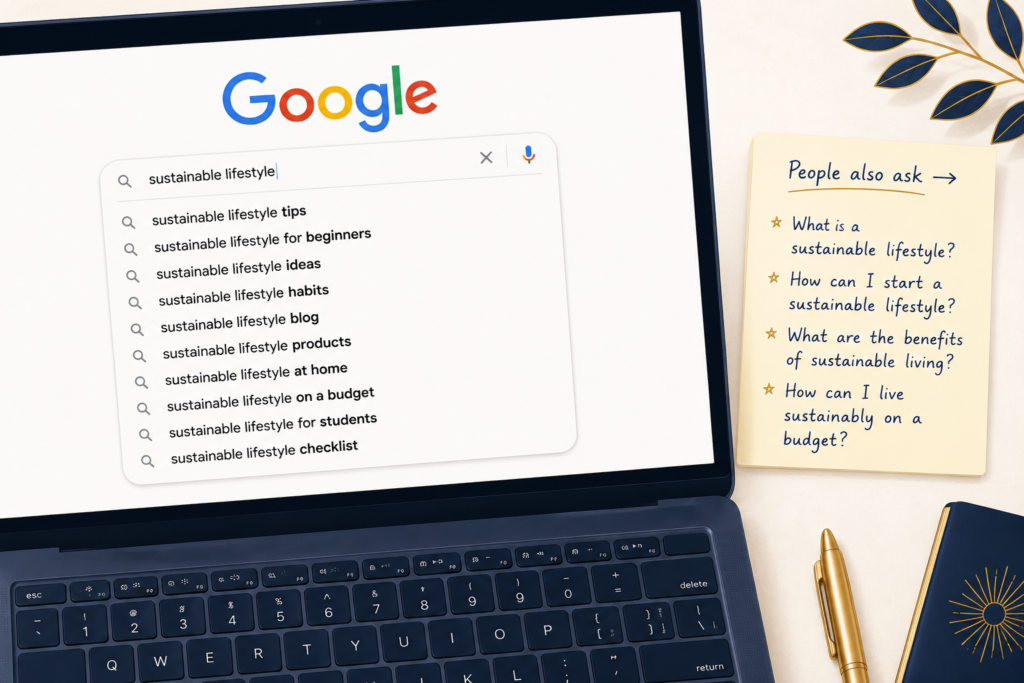
Open an incognito window (so your search history doesn’t skew the results) and start typing your topic into Google. Don’t hit enter yet, just watch what autofill suggests. Those completions are pulled from real search behavior. They’re telling you how people phrase their questions.
Now scroll to the bottom of a search results page. The “People also ask” box and the “Related searches” section at the bottom are gold. Screenshot them. They show you the adjacent questions your audience has, and each one is a potential piece of content.
Use Google Search Console if your site is live
If your site is already up and verified in Google Search Console, go to the Performance report and filter by queries. You’ll see what people actually typed before clicking through to your site, including terms you might never have thought to target. Sort by impressions to find keywords where you’re showing up but not ranking well. Those are your clearest opportunities.
This is one of the most underused free tools available, and it’s sitting right there.
Try Answer the Public (free tier) and AlsoAsked
Answer the Public visualizes search questions around a keyword — organized by who, what, where, how, and why. The free version limits your daily searches, so use it intentionally. Pick your core topic and look for patterns in what people want to understand.
AlsoAsked pulls from “People also ask” data and shows you how questions branch from one another. It’s particularly useful for mapping out a content cluster — a group of related posts that support each other.
Browse Reddit, Quora, and niche forums
Go where your audience actually talks. Search your topic on Reddit and look at what gets asked repeatedly, what frustrates people, and what advice gets the most upvotes. Quora works similarly. If your niche has a Facebook group or an industry forum, spend some time reading threads.
This isn’t formal keyword research, but it’s easy insight into the language your readers use and the problems they’re trying to solve. That’s the whole point.
Check your competitors’ content (for free)
You don’t need a paid tool to see what your competitors are writing about. Browse their blogs manually and note which topics they return to, which posts seem thorough enough to rank, and where you see obvious gaps. If everyone in your niche is writing about Topic A but nobody’s covering Topic B, that’s a signal.
You can also paste a competitor’s URL into Ubersuggest (free tier) for a limited but useful look at their top-performing pages.
Organize what you find
Keep a running spreadsheet, even a simple one, with your keyword ideas, the source where you found them, and the search intent behind each one (informational, navigational, commercial, transactional). Search intent matters more than exact keyword match. Google is good at understanding what someone means, not just what they typed. Write to answer the question, not just to hit a phrase.
The bottom line
Free keyword research won’t give you everything. But it’ll give you enough to start creating content with purpose — content that’s aimed at real questions from real people, instead of guesswork.
If you’re ready to go deeper with data-backed strategy, keyword gap analysis, and a content plan built around actual search demand, I’d love to help. Reach out here and let’s talk about what’s possible.